
As regulatory pressure increases and geopolitical uncertainty affects digital infrastructure, organizations are reassessing where and how their IT management data is hosted.
For companies operating in the European Union, digital sovereignty is no longer a theoretical debate. It is a governance, risk, and compliance issue.
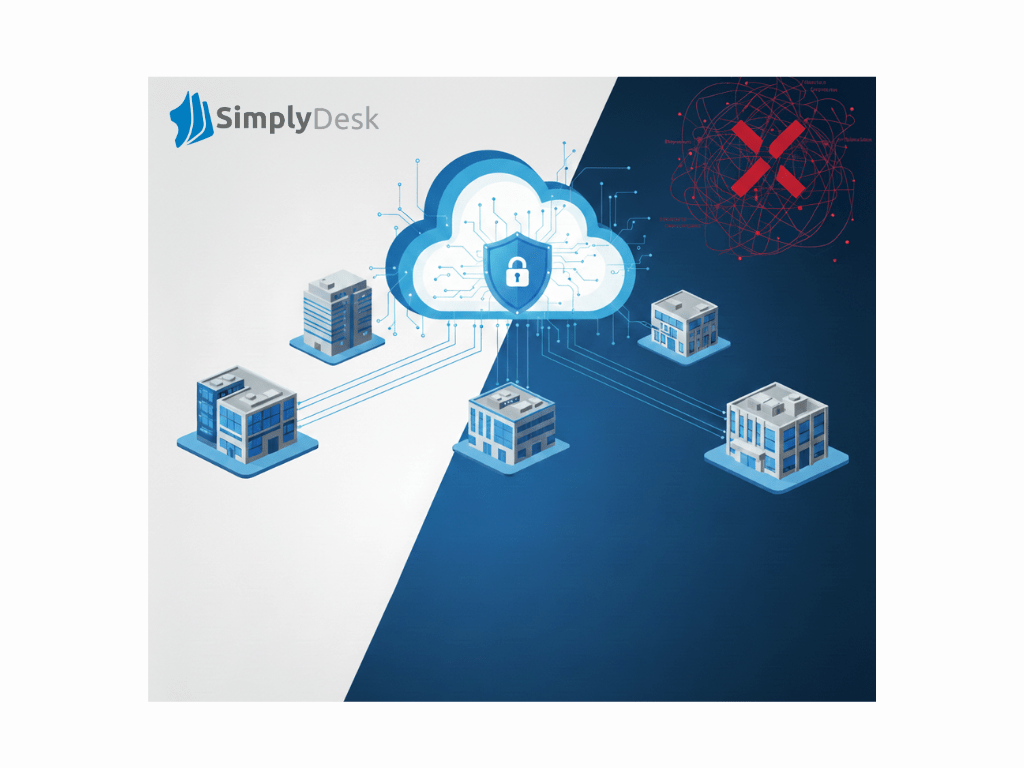
This is where a sovereign cloud strategy becomes a decisive factor particularly for IT Service Management (ITSM) platforms such as SimplyDesk.
What Is a Sovereign Cloud?
A sovereign cloud is a cloud environment in which:
Data is stored and processed within a defined national or European jurisdiction.
Infrastructure is operated under local laws.
Governance mechanisms reduce exposure to extraterritorial legislation.
In the European context, sovereign cloud strategies are often designed to align with:
General Data Protection Regulation (GDPR)
NIS 2 Directive
National cybersecurity frameworks supervised by authorities such as ANSSI
It is important to note that “sovereign” does not automatically mean immunity from all foreign legal influence. However, it significantly reduces exposure to non-EU jurisdictional reach when properly structured.
Why Sovereignty Matters for IT Service Management
An ITSM platform processes highly sensitive operational data:
Incident and problem records
Internal communications
Infrastructure mapping
Asset inventories (ITAM)
User and access information
This dataset effectively represents a digital blueprint of your organization.
Hosting this information within a sovereign European infrastructure strengthens:
Regulatory alignment
Audit readiness
Operational continuity
Stakeholder trust
For organizations in regulated sectors (public administration, healthcare, finance, education), jurisdictional clarity is a board-level concern.
SimplyDesk and Sovereign Infrastructure
SimplyDesk can be deployed using hosting models designed to align with European data residency requirements, including infrastructure operated by providers such as OVHcloud.
This approach supports:
1. Data Residency Control
All operational ITSM data can be hosted within France or the European Union, ensuring that processing occurs under EU law.
2. Regulatory Alignment
Sovereign hosting models can facilitate compliance efforts related to:
GDPR data residency principles
Sector-specific cybersecurity obligations
National implementations of NIS2
Compliance remains the responsibility of the organization, but infrastructure alignment reduces structural risk.
3. Infrastructure Transparency
Unlike global hyperscale environments such as Amazon Web Services, Microsoft Azure, or Google Cloud sovereign European hosting models are designed around jurisdictional predictability and local governance frameworks.
This distinction is particularly relevant for organizations subject to public procurement rules or strict audit environments.
Executive Advantages of Sovereign ITSM Deployment
Strengthened Risk Governance
Board members and compliance officers require clarity regarding:
Where data is stored
Under which legal framework it is governed
Who has administrative access
A sovereign ITSM deployment reduces ambiguity in these areas.
Reduced Jurisdictional Exposure
While no system can claim absolute legal immunity, sovereign cloud models are structured to reduce exposure to extraterritorial legislation such as the U.S. CLOUD Act by limiting foreign operational control.
Strategic Autonomy
Digital infrastructure is now part of economic resilience strategy. Maintaining control over core operational tools such as ITSM platforms supports long-term autonomy and continuity planning.
Why Mid-Sized Companies Are Reassessing Their Hosting Strategy
Mid-sized organizations are increasingly affected by regulatory expansion across the EU.
Under the NIS 2 Directive, many entities classified as “important” or “essential” may face stricter cybersecurity governance requirements, depending on sector and size thresholds defined by national transposition laws.
This creates three strategic imperatives:
1. Audit Preparedness
Regulators increasingly examine:
Data governance policies
Incident reporting mechanisms
Infrastructure security controls
Hosting your ITSM platform within a clearly defined EU jurisdiction simplifies documentation and audit defensibility.
2. Client Assurance in B2B Markets
In competitive tenders, data residency and infrastructure transparency are becoming evaluation criteria. A sovereign ITSM environment strengthens trust positioning.
3. Predictable Cost Structures
European sovereign providers often offer clearer pricing models compared to globally distributed hyperscale environments, reducing exposure to unpredictable cross-border cost variables.
Deployment Flexibility: SaaS or On-Premise
SimplyDesk supports multiple hosting strategies:
SaaS Mode (Sovereign Infrastructure)
Hosted within EU-based data centers
Designed to align with European regulatory frameworks
On-Premise Deployment
Full internal hosting
Suitable for organizations requiring maximum isolation or specific sectoral compliance
This flexibility enables alignment with varying sovereignty and risk management policies.
Is a sovereign cloud required under GDPR?
The General Data Protection Regulation does not mandate a sovereign cloud. However, it requires lawful data transfers and appropriate safeguards. Hosting data within the EU simplifies compliance with cross-border transfer rules.
Does sovereign hosting eliminate exposure to foreign laws?
No infrastructure can guarantee absolute immunity. However, sovereign cloud models reduce exposure by limiting foreign operational control and keeping data under EU jurisdiction.
Is sovereign cloud more secure than public hyperscale cloud?
Security depends on architecture, configuration, governance, and certification. Sovereign cloud emphasizes jurisdictional control and regulatory alignment rather than claiming superior technical security by default.
Is sovereign ITSM suitable for mid-sized companies?
Yes. Organizations operating in regulated sectors or handling sensitive operational data can benefit from clearer jurisdictional governance and audit readiness.
Conclusion: Sovereignty as a Governance Strategy
Digital sovereignty is not about isolation. It is about control, accountability, and long-term resilience.
For organizations that consider IT Service Management a critical operational backbone, hosting strategy is no longer a technical afterthought it is a governance decision.
By combining ITSM functionality with sovereign deployment options, SimplyDesk enables organizations to align operational efficiency with regulatory clarity and strategic autonomy.