
AI and Digital Maturity are now central to modern business transformation. While artificial intelligence promises automation, predictive insights, and operational efficiency, its real impact depends on one critical factor: digital readiness. Without strong digital foundations, AI cannot deliver sustainable and measurable performance.
Artificial intelligence is neither a miracle solution nor an immediate obligation.
For companies that have not yet reached sufficient digital maturity, adopting AI too early can create a gap between ambition and operational reality potentially slowing overall transformation and increasing complexity.
Conversely, for organizations that have structured their processes, centralized their data, and established strong IT governance, AI becomes a powerful strategic lever capable of enhancing performance, improving service quality, and strengthening decision-making.
The key lies in a progressive and realistic approach aligned with the organization’s maturity level, supported by robust and scalable solutions such as SimplyDesk, designed to guide and accelerate this evolution.
Understanding Digital Maturity
What Is Digital Maturity?
Digital maturity refers to an organization’s ability to effectively leverage digital technologies to manage its processes, data, and decision-making.
It goes far beyond simply acquiring tools. It relies on several complementary dimensions:
- Business process digitalization
- Automation of repetitive tasks
- Data centralization and quality
- Digital and analytical culture
- IT governance and strategic alignment
A digitally mature organization does not merely use software it structures, exploits, and creates value from data.
Characteristics of Low Digital Maturity Organizations
Companies with low digital maturity typically exhibit:
- Manual or semi-manual processes highly dependent on individuals
- Proliferation of Excel files, data silos, and disconnected tools
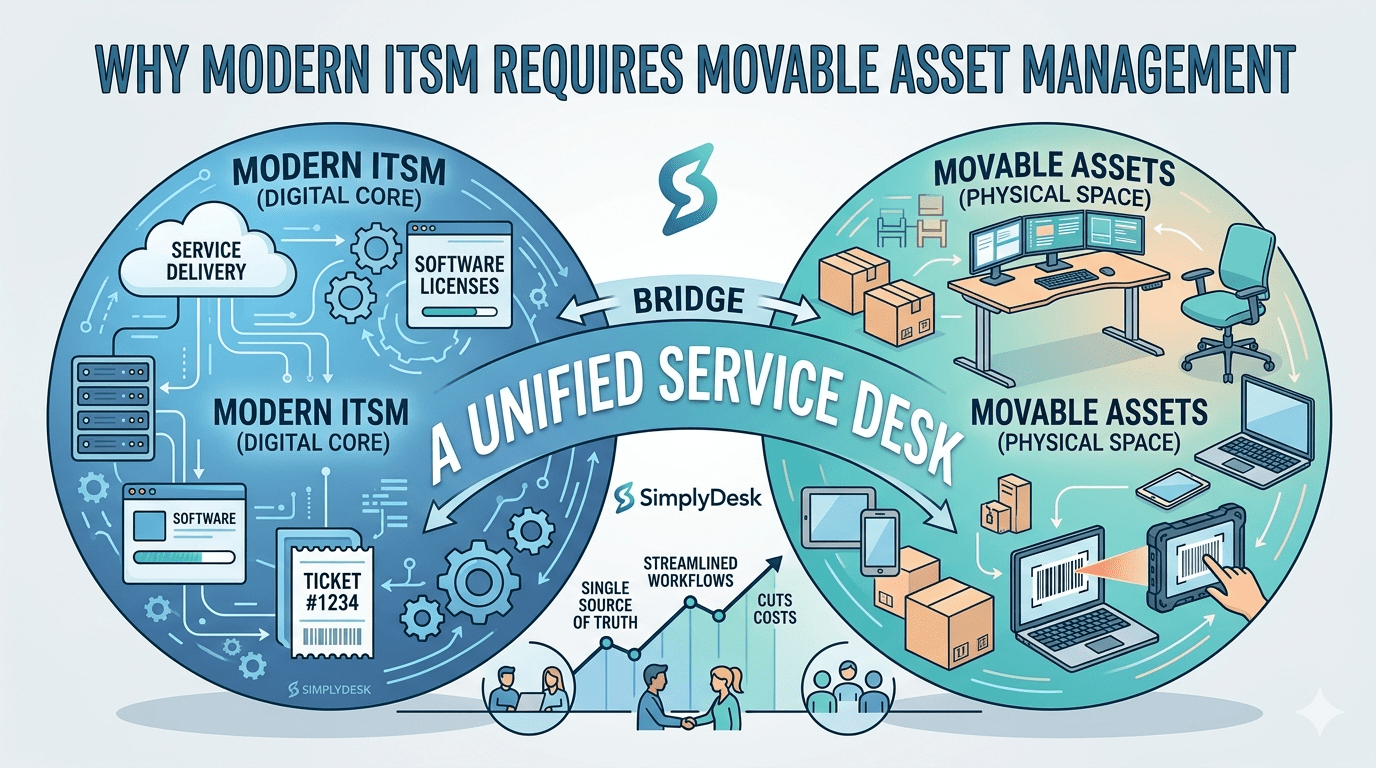
- Lack of a single source of truth
- Reactive rather than predictive decision-making
- Limited automation of IT, business, or support workflows
In such environments, introducing AI may appear attractive, but it rests on fragile foundations.
Can AI Be Adopted Without Prior Digitalization?
The Illusion of a Technological Shortcut
One of the most common mistakes is to consider AI as a shortcut capable of compensating for incomplete digital transformation. In reality, AI is not a substitute for digitalization it is an accelerator.
Without reliable, structured, and historical data, AI:
- Learns poorly
- Produces inconsistent results
- Amplifies existing errors
In short, poor foundations lead to poor intelligence.
The Risk of Structural Imbalance
When a digitally immature company adopts AI too quickly, a structural divide may emerge:
- Some departments master AI tools
- Others remain dependent on manual processes
- Results become uneven and difficult to interpret
- Overall governance loses clarity
This imbalance can negatively impact performance, create resistance to change, and weaken the credibility of digital initiatives.
Complexity, Costs, and External Dependency
Without proper preparation, AI adoption often implies:
- High integration costs
- Increased reliance on external providers
- Difficulty maintaining and evolving models
- Limited internal understanding of results
Under these conditions, return on investment becomes uncertain.
AI as a Strategic Lever for Mature Organizations
When AI Becomes a Performance Multiplier
For companies that have reached a certain level of digital maturity, AI acts as a value multiplier. It builds upon:
- Already automated processes
- Consistent and exploitable data
- Structured IT governance
- A culture of measurement and continuous improvement
In this context, AI enables organizations to shift from reactive to predictive and proactive operations.
Practical Use Cases in ITSM, ITAM, and ESM
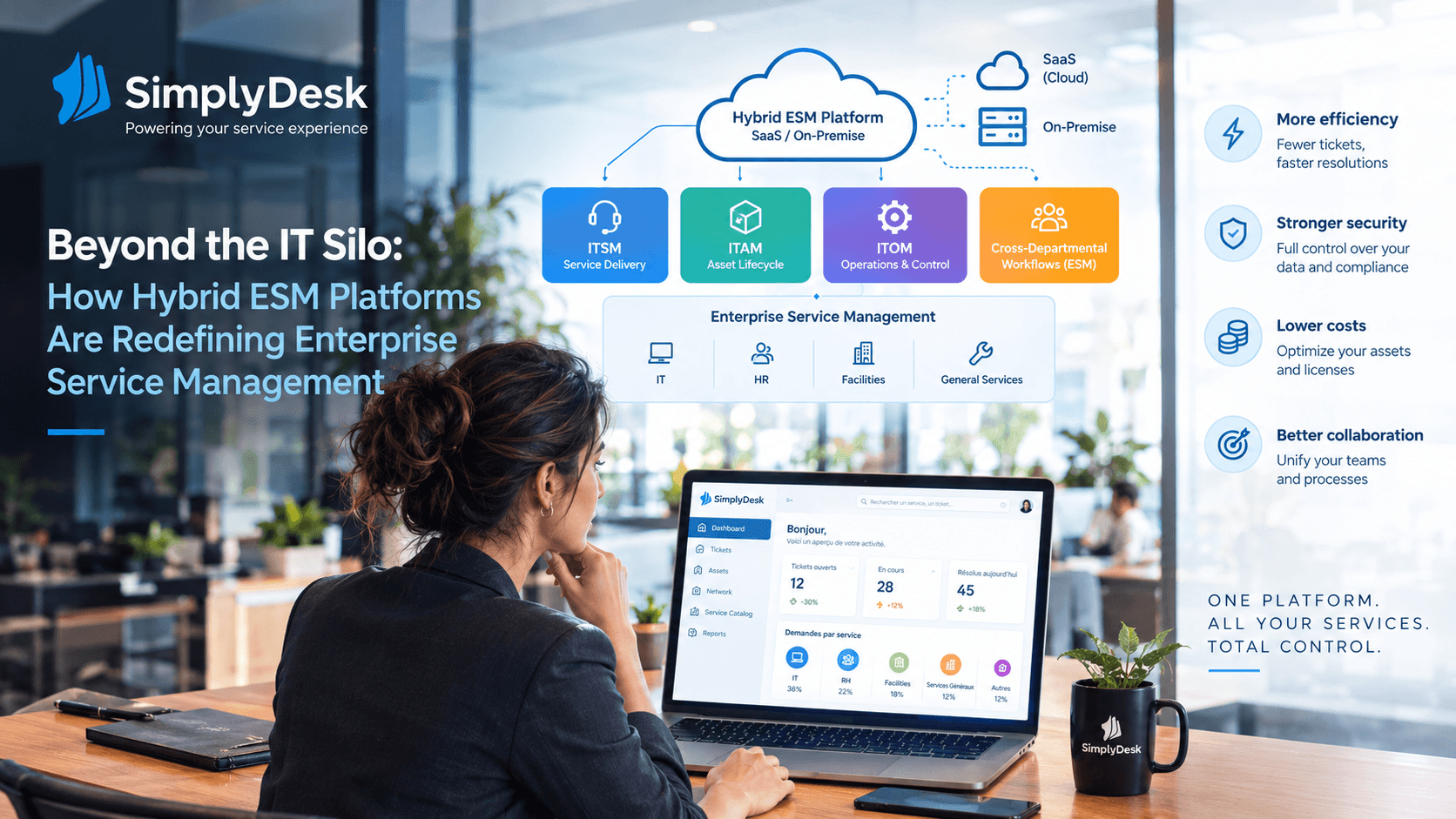
In structured environments, particularly when supported by solutions like SimplyDesk, AI can enhance:
IT Service Management (ITSM)
- Intelligent ticket analysis
- Automatic incident prioritization
- Detection of recurring incidents
- Reduction of MTTR (Mean Time to Repair)
IT Asset Management (ITAM)
- Hardware failure prediction
- Asset lifecycle optimization
- Compliance and license analysis
- Budget decision support
Enterprise Service Management (ESM)
- Extending AI capabilities to business services
- Automation of internal service requests
- Improved employee experience
AI Supports Decision-Making It Does Not Replace It
A key principle: AI does not replace human governance.
It informs decisions, provides recommendations, and identifies trends but it must remain supervised, explainable, and auditable.
Real AI Constraints even for Ready Organizations
Governance, Ethics, and Transparency
Even mature organizations must address:
- Algorithmic bias monitoring
- Transparency of automated decisions
- Regulatory compliance (GDPR, traceability)
Integration and Interoperability
What Strategy Should You Adopt Based on Your Maturity Level?
For Low or Mid-Maturity Organizations
- Digitalize critical processes
- Structure and centralize data
- Automate workflows
- Implement a reliable ITSM/ITAM foundation
- Test AI through limited, controlled use cases
For Mature Organizations
- Identify high-value processes
- Deploy AI integrated into existing tools
- Measure impact using precise KPIs
- Continuously train teams
- Adjust models based on operational feedback
Conclusion: AI Is a Step not the Destination
AI and Digital Maturity are now central to modern business transformation. While artificial intelligence promises automation, predictive insights, and operational efficiency, its real impact depends on one critical factor: digital readiness. Without strong digital foundations, AI cannot deliver sustainable and measurable performance.
Artificial intelligence is neither a miracle solution nor an immediate obligation.
For companies that have not yet reached sufficient digital maturity, adopting AI too early can create a gap between ambition and operational reality potentially slowing overall transformation and increasing complexity.
Conversely, for organizations that have structured their processes, centralized their data, and established strong IT governance, AI becomes a powerful strategic lever capable of enhancing performance, improving service quality, and strengthening decision-making.
The key lies in a progressive and realistic approach aligned with the organization’s maturity level, supported by robust and scalable solutions such as SimplyDesk, designed to guide and accelerate this evolution.